How to Finance an ADU in Sonoma County
By Dave Keith, CEO, SCB Builders · November 12, 2026 · ADUs
Ways to pay for an ADU in Sonoma County: home equity, renovation and construction loans, and refinancing, plus the permit and impact fees to budget for and what changed with local programs.
An accessory dwelling unit can make room for a parent, give an adult child a place of their own, or, where permitted, house a long-term tenant. For most Sonoma County families, the hardest part isn't the design. It's working out how to pay for it.
This guide covers the main ways homeowners finance an ADU, the costs beyond construction to plan for, and what has changed with local and state programs. SCB Builders is a contractor, not a lender. This is general information, not financial or tax advice.
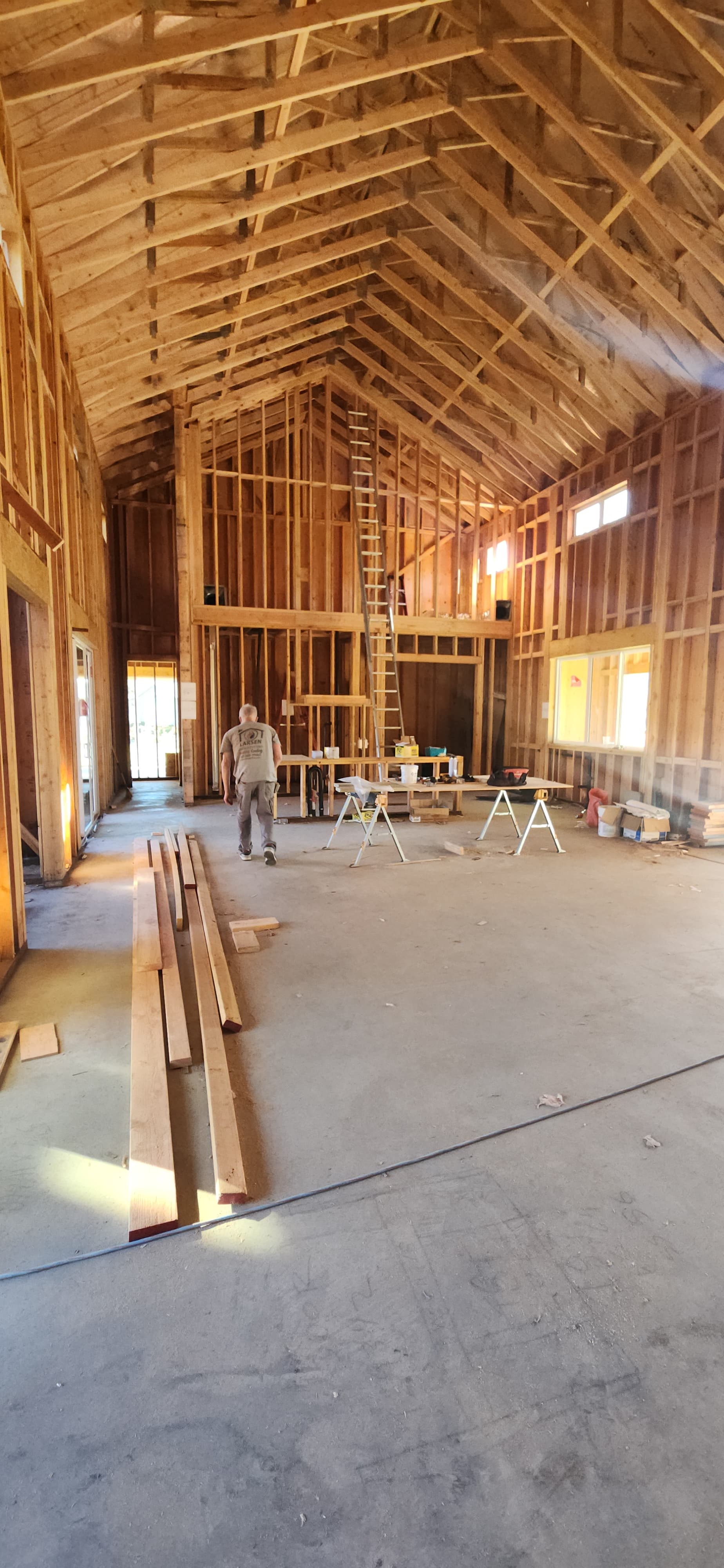
Start with the site, then the budget, then the loan
The cost of an ADU depends heavily on the property: access, slope, utility routes, septic or sewer, and which agency has jurisdiction. Two similar floor plans can cost very different amounts on different lots. That's why we start every ADU with a feasibility review. It gives you, and later your lender, a realistic budget to work from.
Before you talk to lenders, have a rough answer to three questions:
- What type of ADU? Detached, attached, or a garage or interior conversion.
- Roughly what size? As you'll see below, size affects fees.
- What will it be used for? Family, a long-term rental, or both over time. Some lenders treat expected rental income differently, so ask.
Your financing options
Most Sonoma County homeowners use one of the following, or combine a couple.
Home equity line of credit (HELOC)
A HELOC borrows against the equity in your current home. You draw funds as the project needs them and pay interest on what you've drawn. It usually sits behind your first mortgage, so a low first-mortgage rate stays in place. It works well when your current equity comfortably covers the ADU budget.
Closed-end second (home equity loan)
One lump sum at closing, usually on a fixed payment. It's a good fit once the ADU is designed and priced and the number isn't moving.
Renovation HELOC
Some lenders calculate available equity on what the property is expected to be worth after the ADU is built, not what it's worth today. That can help when current equity falls short of the full project.
Construction loan
A loan sized around the project. Funds are released in stages as the work reaches milestones. It's common for larger detached ADUs, especially when the budget is high compared with current equity. Expect the lender to ask for plans, a line-item budget, a schedule, and your contractor's documents. For a deeper comparison, see Construction Loan vs. HELOC.
Cash-out refinance
Replaces your current first mortgage with a larger one and pays you the difference. It's worth considering mainly if your existing rate isn't one you'd mind giving up.
Options for specific situations
- Reverse mortgage (homeowners 62+): can turn home equity into funds for improvements without required monthly mortgage payments. Other obligations still apply, so ask the lender to explain them.
- Equity share: cash from your home equity with no monthly payment, in exchange for sharing in the home's future change in value.
All of these are available to compare on our Financing page.
Costs beyond construction to budget for
Lenders and homeowners both get surprised by the costs around the build. Plan for:
- Design, engineering, and studies: plans, structural engineering, energy compliance, and site-specific studies (soils, septic, and so on) when needed.
- Permit and plan-check fees.
- Impact fees, which depend on size. For ADUs permitted by Permit Sonoma (unincorporated county), according to Permit Sonoma's ADU fee page (checked November 11, 2026):
- ADUs with more than 750 square feet of interior livable space are subject to parks mitigation and traffic impact fees. In the Sonoma County Fire District and the Sonoma Valley Fire District, they're also subject to fire impact fees.
- ADUs with more than 500 square feet may be subject to school fees set by the local school district.
- Junior ADUs (JADUs) are exempt from these impact fees.
- Pre-reviewed, factory-built, and manufactured ADUs get reduced building plan-check and CalGreen review fees.
Keeping a unit at or under 750 square feet can therefore change the fee picture, and with it the amount you need to borrow. Properties inside a city (Santa Rosa, Petaluma, Healdsburg, and others) follow that city's fee schedule instead. Confirm fees for your address. - Utility connections. Permit Sonoma notes that ADUs and JADUs converted from existing space on a lot with a single-family home are not required to install a new or separate utility connection or pay a related connection fee or capacity charge. Other ADUs may be. Trenching, panel upgrades, and septic or well improvements can be significant on rural lots. - A contingency. Site conditions are the biggest unknown on many ADU projects, so budget for surprises.
Programs that have changed
You'll still find older articles pointing to programs that are no longer taking applications:
- CalHFA ADU Grant Program. CalHFA's ADU page says the latest round of funding was fully allocated as of December 28, 2023. It also warns that anyone offering to help you get an ADU grant is running a scam. (Checked November 11, 2026. Check calhfa.ca.gov for any new round.)
- Sonoma County Energy Independence Program (SCEIP). Sonoma County's SCEIP page says the program is closed to new applications. Residential applications stopped in January 2026, and the Board of Supervisors voted on July 14, 2026 to wind down the rest of the program. Existing assessments continue to be serviced. (Checked November 11, 2026.)
- Federal residential energy credits. According to the IRS, the Residential Clean Energy Credit (for solar, battery storage, and similar) is not available for property placed in service after December 31, 2025. (Checked November 11, 2026.)
If a new local or state ADU incentive appears, we'll point you to it. Permit Sonoma (for unincorporated parcels) or your city's planning department is the place to confirm what's currently offered.
About counting on rental income
If you plan to rent the ADU long term, rental income can help offset the payment over time. Before you count on it:
- Confirm that the use you have in mind is allowed for your property. Short-term or vacation rental rules are set locally and are often stricter for ADUs.
- Ask your lender whether, and how, they consider projected rental income when qualifying you.
- Get local rent estimates for a unit like yours from a property manager or agent, not from general averages.
A practical order of operations
- Feasibility review: jurisdiction, utilities, access, and site constraints.
- Preliminary scope and budget from your builder, including fees and site work.
- Talk with a lender while the design is still flexible, so the plan fits what you can fund.
- Final design, permitting, and a line-item contract with a payment schedule that matches your financing.
- Build, with draws or payments tied to progress.
SCB Builders works with Priority Financial Network so homeowners can compare financing options while we price the ADU. Start on our Financing page.
Talk with us about your ADU
Bring your property address, your goals for the space, a working budget, and any survey, site plan, or septic and utility records you have. You don't need a finished design. Call (707) 546-2228, email info@scbbuild.com, or contact us for a free consultation. Our office is at 3690 Santa Rosa Ave, Santa Rosa, CA 95407, open Monday through Friday, 8am to 5pm. Learn more about our ADU design and build services.
SCB Builders, Inc. is a licensed general contractor (CSLB #1050494), not a lender or tax advisor. Loan availability, terms, and timing depend on the lender and your eligibility. Fees and program details change. Confirm them for your property.
Sources (checked November 11, 2026)
- Permit Sonoma, "Fees for ADUs and JADUs," https://permitsonoma.org/regulationsandlongrangeplans/regulationsandinitiatives/housingtypes/accessoryunitsandjuniorunits/feesforadusandjadus: the 750 sq ft impact-fee threshold, the 500 sq ft school-fee note, JADU exemption, reduced plan-check fees for pre-reviewed and factory-built ADUs, and connection-fee rules for conversions.
- CalHFA, ADU Grant Program, https://www.calhfa.ca.gov/adu/: "December 28, 2023 – The latest round of ADU funding has been fully allocated," plus the scam warning.
- County of Sonoma, SCEIP, https://sonomacounty.gov/administrative-support-and-fiscal-services/auditor-controller-treasurer-tax-collector/divisions/sceip: "SCEIP is now closed to new applications," residential applications stopped January 2026, Board action July 14, 2026.
- IRS, Residential Clean Energy Credit, https://www.irs.gov/credits-deductions/residential-clean-energy-credit
- SCB Builders, https://scbbuild.com/financing and https://scbbuild.com/services/adu: product list, Priority Financial Network, and ADU process and feasibility approach.
Dave Keith, CEO, SCB Builders