Going Green: Sustainable Materials for Your Sonoma Home
By Dave Keith, CEO, SCB Builders · November 15, 2025 · Sustainability
Discover eco-friendly options like reclaimed wood and solar-ready designs that reduce impact while enhancing beauty.
Sustainability in home building has evolved from a niche preference into a mainstream expectation — and nowhere is that shift more pronounced than in Sonoma County. In a region defined by vineyards, redwood forests, coastal watersheds, and a long tradition of environmental stewardship, homeowners increasingly want their homes to reflect the same values they bring to every other area of their lives. At SCB Builders, we've seen the demand for sustainable materials and green building practices grow dramatically over the past decade, and we've invested in the knowledge and supplier relationships necessary to deliver on that expectation.
What Does Sustainable Building Actually Mean?
Sustainable building encompasses decisions made across the entire construction process — from the materials specified, to how they're sourced, to how the finished home uses energy and water over its lifetime. The most visible aspect for most homeowners is material selection, but true sustainability also involves systems design: insulation, windows, mechanical systems, and the orientation and layout of the home itself.
The most common certification frameworks — LEED (Leadership in Energy and Environmental Design), GreenPoint Rated, and California's Title 24 energy standards — provide structured approaches to measuring a building's sustainability across multiple categories. We work within all of these frameworks, and we can help homeowners understand the tradeoffs between certification costs and actual sustainability benefits.
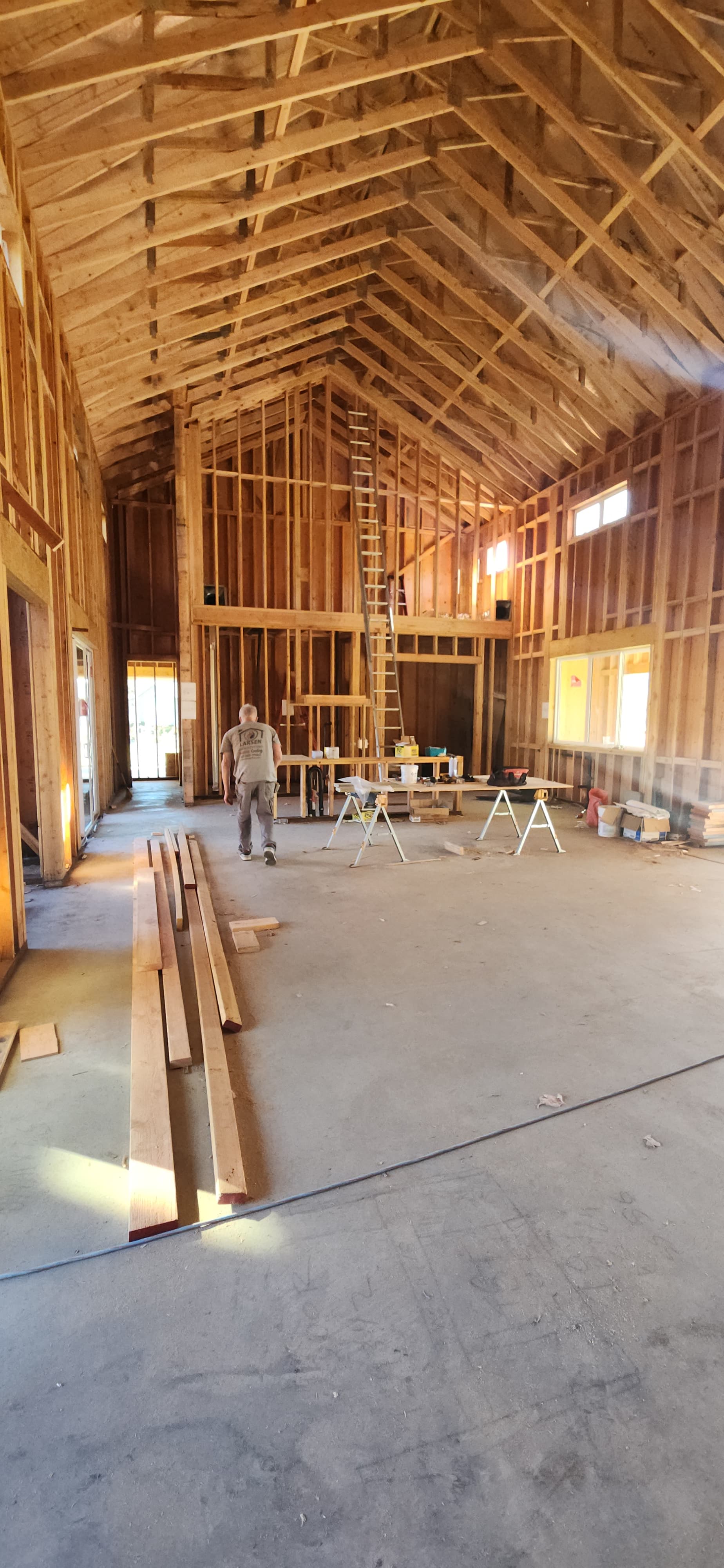
That said, you don't need a certification to build sustainably. Many of the most impactful choices — material selection, insulation quality, window performance, mechanical system efficiency — simply represent good building practice that serves the homeowner financially as well as environmentally.
Reclaimed and Salvaged Wood
Reclaimed wood is perhaps the most visually distinctive sustainable material in residential construction, and it's genuinely meaningful from an environmental perspective. Using salvaged timber — from demolished buildings, decommissioned industrial facilities, barn deconstructions, or wind-fallen old-growth trees — avoids both the harvest of new timber and the energy required to process it. It also brings a material richness to a home that new lumber simply can't replicate.
In Sonoma County, we have access to local reclaimed wood sources that most regions don't: salvaged redwood from old wine fermentation tanks, Douglas fir from demolished agricultural structures, and character-grade oak from estate clearing projects. This material is genuinely local — often within 50 miles of the job site — which reduces transportation emissions and supports regional salvage operations.
We use reclaimed wood for exposed beams, flooring, floating shelves, mantels, accent walls, and in some cases for entire exterior cladding systems. Structural use of reclaimed wood requires grading and engineering consideration, but for visible decorative and finish applications, reclaimed material is often the most straightforward choice.
One important note: reclaimed wood from pre-1970s structures may contain lead paint or other legacy finishes. Proper testing and preparation is required before use in occupied living spaces. We handle this process as part of our material procurement workflow.
Bamboo and Cork Flooring
Bamboo has become well-established as a hardwood alternative with a dramatically shorter harvest cycle — bamboo reaches harvestable maturity in 5–7 years, compared to 20–80 years for hardwood species. Modern strand-woven bamboo flooring is harder than most domestic hardwoods, highly moisture-resistant, and available in a range of natural and carbonized tones that complement the warm palettes common in Wine Country homes.
The environmental credibility of bamboo does depend on sourcing. We specify bamboo from suppliers certified by the Forest Stewardship Council (FSC) or with third-party documentation of responsible growing and manufacturing practices. Some bamboo products use adhesives with elevated formaldehyde content, which we screen for — we specify products that meet California's CARB Phase 2 emissions standards, which are among the strictest in the world.
Cork flooring is harvested from the bark of cork oak trees — the bark regenerates fully after harvest, making it a genuinely renewable resource with minimal ecological impact. Cork has unique properties beyond sustainability: it's naturally antimicrobial, a strong thermal and acoustic insulator, and extremely comfortable underfoot due to its cellular air-pocket structure. It's particularly appropriate for spaces where people stand for extended periods, like kitchens.
Both bamboo and cork require some care and are not ideal in every application — they can be sensitive to extreme moisture and direct sunlight. We help clients understand the appropriate applications and long-term care requirements before specifying these materials.
Recycled and Reclaimed Metal
Steel is among the most recycled materials in the world — recycled steel requires approximately 75% less energy to produce than virgin steel. Metal roofing made from recycled content is one of the most sustainable roofing choices available, combining environmental benefits with exceptional durability (50+ year lifespan), fire resistance (Class A rating), and increasingly attractive aesthetics in standing seam and metal shingle profiles.
Recycled aluminum and steel also appear in framing components, flashing, and exterior cladding systems. When we specify metal building components, we confirm recycled content percentages with suppliers and include this information in our LEED or GreenPoint documentation when applicable.
On the interior, architectural steel — reclaimed or with high recycled content — makes a strong material statement in modern and industrial-leaning designs. Steel beam elements, custom steel handrails, and steel-framed windows and doors all carry environmental credentials alongside their aesthetic appeal.
Insulation: The Invisible Sustainability Champion
Insulation may not be visible in the finished home, but it's among the most impactful sustainability decisions in any construction project. A well-insulated home uses dramatically less energy for heating and cooling, which reduces both operating costs and carbon emissions over the life of the building.
Sustainable insulation options we commonly specify:
- Recycled denim (cotton) batt insulation — made from post-industrial textile waste, with no formaldehyde binders, safe to handle without protective gear, and excellent thermal and acoustic performance
- Cellulose insulation — made from recycled newspaper and cardboard, typically 80–85% recycled content. Excellent for dense-pack blown-in applications in wall cavities and attics.
- Mineral wool (rock wool) — made from volcanic rock or steel slag, naturally fire-resistant, moisture-resistant, and an excellent acoustic insulator
- Sheep's wool insulation — a genuinely renewable natural fiber with excellent thermal and moisture-buffering properties, though at a cost premium over conventional options
We've moved away from specifying fiberglass batts as a default — not because they're ineffective, but because the sustainable alternatives perform as well or better and carry meaningfully lower environmental impact.
Low-VOC Paints and Finishes
Volatile organic compounds (VOCs) off-gassed from conventional paints, adhesives, and finishes are among the most significant sources of indoor air quality degradation in newly constructed homes. Low-VOC and zero-VOC paints and finishes have improved dramatically in the past decade — they now perform comparably to conventional products in terms of coverage, durability, and color options while eliminating the health and environmental concerns associated with VOC off-gassing.
We specify low-VOC products throughout: paints and primers, wood finishes and stains, flooring adhesives, and cabinet coatings. California's air quality standards are already among the strictest in the country, and we exceed those standards as a matter of practice. For clients who are particularly sensitive to indoor air quality — including those with respiratory conditions or young children — we can provide full material documentation demonstrating VOC content for every finish product used in their home.
Solar-Ready and Net-Zero Design
California's Title 24 energy code requires new single-family homes to include solar photovoltaic systems, and Sonoma County's sunshine makes solar a strong performer. For new construction, we integrate solar into the building design from the beginning — orienting rooflines for optimal south-facing exposure, sizing electrical systems to accommodate battery storage, and designing around the aesthetics of solar so that panels complement rather than conflict with the home's architectural character.
Net-zero homes — those that produce as much energy as they consume over the course of a year — are increasingly achievable in Sonoma County with current solar, battery storage, and insulation technology. We've completed net-zero projects for homeowners who wanted to eliminate utility bills and reduce their carbon footprint simultaneously, and we can assess whether net-zero performance is achievable and cost-effective for any new construction project.
EV charging infrastructure is now required for new construction under updated California codes, and we incorporate this into our standard electrical planning rather than treating it as an add-on.
Building Green in Wine Country
At SCB Builders, sustainable building is not a checkbox — it's a reflection of who we are as a company rooted in Sonoma County. We build in a place of extraordinary natural beauty, and we take seriously our responsibility to protect it. Every material choice, every system design decision, and every supplier relationship we maintain reflects that commitment.
Whether you're interested in a fully certified green home, specific sustainable material upgrades, or simply want to ensure your home is built with environmental responsibility, we're ready to help. We bring expertise, honest guidance on what makes the most difference, and supplier relationships that give you access to the best sustainable materials available.
Water Efficiency: The Overlooked Sustainability Dimension
In a region that has experienced severe multi-year droughts and where water supply reliability is a long-term concern, water efficiency deserves a place alongside energy efficiency in any discussion of sustainable building in Sonoma County. The choices made in a new home or major renovation can dramatically reduce lifetime water consumption without any sacrifice in comfort or functionality.
Low-flow fixtures — modern low-flow shower heads, faucets, and toilets have improved dramatically. WaterSense-certified fixtures use 20% less water than standard models without any perceptible reduction in performance. We specify WaterSense fixtures as a default on all projects.
Greywater systems — greywater recycling captures lightly used water from sinks, showers, and laundry for reuse in landscape irrigation. California's simplified greywater standards make basic laundry-to-landscape systems straightforward to install during new construction. More sophisticated greywater systems can irrigate a substantial garden area with water that would otherwise be discharged to the sewer.
Rainwater capture — cistern systems that capture roof runoff for landscape use are increasingly popular in Sonoma County, where winter rainfall can be abundant even in drought years. Stored rainwater used for summer irrigation reduces reliance on municipal water and groundwater during the driest months.
Drought-tolerant landscaping — the landscape around a home can account for a substantial portion of total household water use. Designing landscapes around California native plants and drought-tolerant Mediterranean species eliminates the need for supplemental irrigation once plants are established, while creating attractive, ecologically rich outdoor spaces.
We work with landscape professionals who specialize in water-efficient design and California native plant palettes. When a home and its landscape are designed together with water efficiency in mind, the result is a property that performs well in both wet and dry years and demonstrates a genuine commitment to the stewardship of Sonoma County's water resources.
Contact SCB Builders today to talk about how we can incorporate sustainable materials and practices into your next Sonoma County project.
Dave Keith, CEO, SCB Builders